

where once a month the breakfast group spends 15 minutes sharing favorite songs, stories, or lyrics.
Sandy’s Sunday Breakfast Club
A Simple Guide to Building New Friendships Safely at Any Age
Why Start a Breakfast Club?
As we get older, many friends move away, become busy, or face health challenges of their own. A breakfast club creates something wonderful to look forward to:
- New friendships
- More laughter
- Interesting conversations
- A reason to get out of the house
- A sense of belonging
- New opportunities and adventures
The goal is not to meet dozens of people.
The goal is to find 5 to 15 good people who enjoy spending time together.
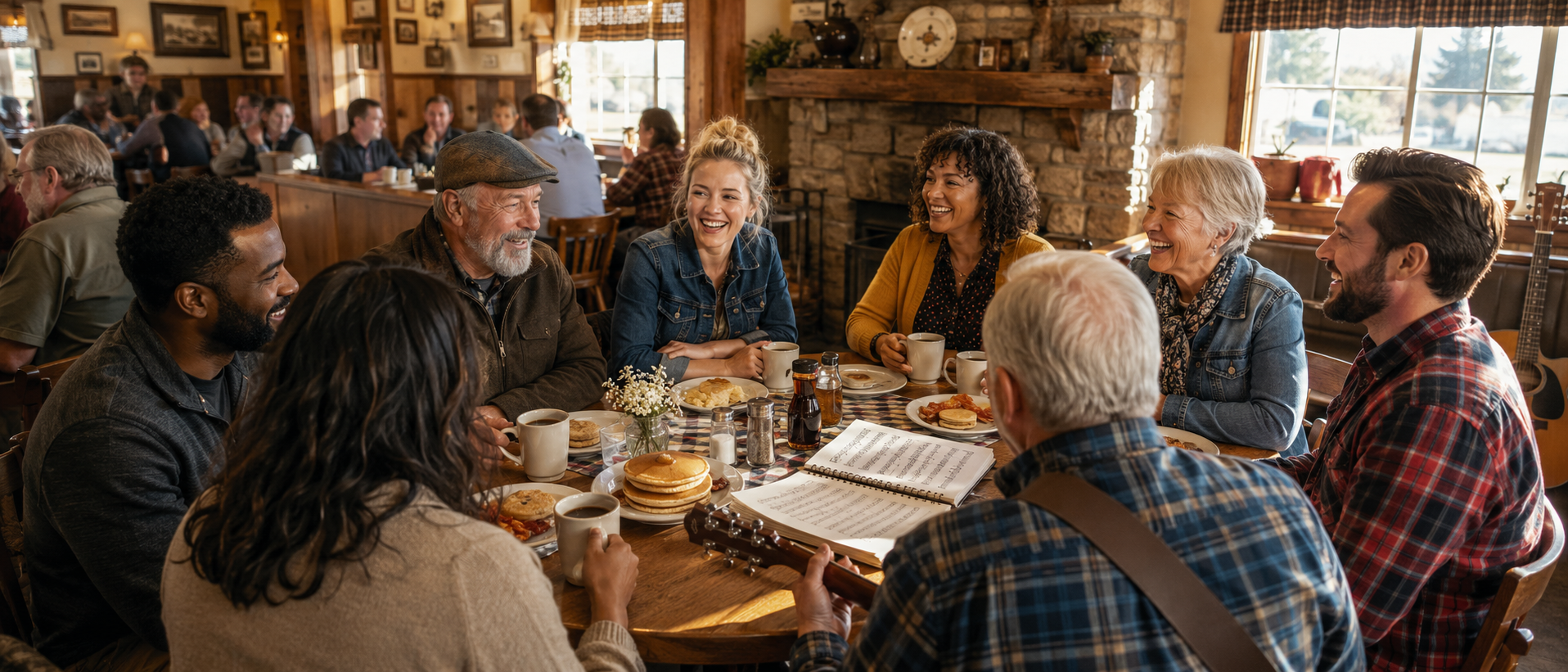
Step 1: Create Your Circle of Trust
Before inviting anyone new:
Make a list of:
- Family members
- Church friends
- Neighbors
- Former coworkers
- Friends from clubs or organizations
- People you’ve met repeatedly at local restaurants or coffee shops
Write down 20 to 30 names.
These become your “foundation group.”
Step 2: The Friend-of-a-Friend Rule
One of the safest ways to meet new people is through introductions.
Rule:
Every member may invite one person they know and trust.
This creates a natural screening process.
Avoid inviting complete strangers to early gatherings.
Step 3: Choose Safe Public Locations
Best locations:
- Local diners
- Cracker Barrel
- Panera Bread
- IHOP
- Community center cafés
- Senior center restaurants
- Hotel breakfast restaurants
Avoid:
- Private homes
- Isolated locations
- Late-night gatherings
Morning breakfasts are ideal because:
- People are alert
- Roads are safer
- Restaurants are busy
- Family members are comfortable with the arrangement
Step 4: Transportation Safety
If Driving Yourself
- Daytime only
- Familiar routes only
- Keep cell phone charged
- Tell someone where you’re going
If Getting a Ride
Preferred order:
- Family
- Longtime friend
- Trusted neighbor
- Church member
- Senior transportation service
- Uber or Lyft
Always:
- Share destination with family
- Confirm driver name
- Carry emergency contact information
Step 5: Outreach Strategy
Send a simple message:
“Hi, I’m putting together a small Sunday Breakfast Club for friendly conversation and companionship. Would you like to join us sometime?”
Keep it casual.
Telephone
The phone is still one of the best tools.
Call people personally.
People love hearing a familiar voice.
Text Messages
Great for:
- Confirming attendance
- Sending reminders
- Sharing restaurant information
Church
Ask:
- Pastor
- Church office
- Women’s groups
- Bible studies
Many people are looking for friendship.
Grocery Store Friends
Many friendships start with familiar faces.
Examples:
- Someone you regularly chat with
- Bakery staff
- Coffee station regulars
- Cashiers you know by name
After several positive interactions:
“Some friends and I get together for breakfast. If you’d ever like to join us, let me know.”
Library
Libraries often host:
- Book clubs
- Lectures
- Community events
Excellent source of thoughtful friends.
Senior Centers
One of the safest ways to meet people.
Ask about:
- Walking groups
- Card groups
- Lunch groups
- Educational programs
Nextdoor
Use carefully.
Good post:
“Friendly local resident looking to start a Sunday Breakfast Club for conversation, friendship, and community. Small group, public restaurant setting. Please message me if interested.”
Never:
- Post personal financial information
- Share home address
- Invite strangers directly to your home
Facebook Community Groups
Look for:
- Local town groups
- Senior groups
- Church groups
- Community event groups
Meet in public first.
Step 6: Vetting New Friends
Green Flags:
- Kind to waitstaff
- Good listener
- Speaks respectfully
- Reliable
- Consistent behavior
- Positive attitude
Red Flags:
- Constantly asking for money
- Extreme anger
- Excessive negativity
- Pushy behavior
- Requests to borrow things
- Pressure to meet privately
Trust your instincts.
If something feels wrong:
Politely decline future invitations.
Step 7: First Meeting Format
Perfect first breakfast:
9:00 AM
Agenda:
9:00 Arrive
9:15 Introductions
9:30 Breakfast
10:15 Favorite stories
10:45 Future plans
11:00 Finish
Keep it short.
Leave people wanting more.
Step 8: Conversation Starters
Ask:
- Where did you grow up?
- What’s the best advice you ever received?
- Favorite vacation?
- Favorite music?
- Favorite childhood memory?
- What would you still like to learn?
Avoid:
- Politics
- Arguments
- Complaints
- Controversial topics
Especially in early meetings.
Step 9: Build Traditions
Examples:
- Birthday breakfasts
- Holiday breakfasts
- Guest speakers
- Country music mornings
- Recipe sharing
- Book discussions
Traditions create belonging.
Step 10: Protect Yourself
Never:
- Give out bank information
- Share passwords
- Co-sign loans
- Lend large amounts of money
- Invest with new acquaintances
Friendship first.
Business never.
Step 11: Create a Contact List
Maintain:
- Name
- Phone
- Emergency contact
Keep copies both on paper and electronically.
Step 12: Have a Purpose
The strongest friendships form around shared interests.
For Sandy, possibilities include:
- Country music appreciation
- Songwriting discussions
- Faith and encouragement
- Local history
- Books
- Community service
- Grandparent stories
People connect through shared passions.
Sandy’s Golden Rule
Start small.
Stay safe.
Be welcoming.
Choose quality over quantity.
Five genuine friends are worth more than fifty casual acquaintances.
And remember:
The purpose isn’t just breakfast.
The purpose is creating something to look forward to every week.